Stateful Slack Simulation for Agent CI Pipelines
Stateful simulators let agent CI test real Slack workflows safely.
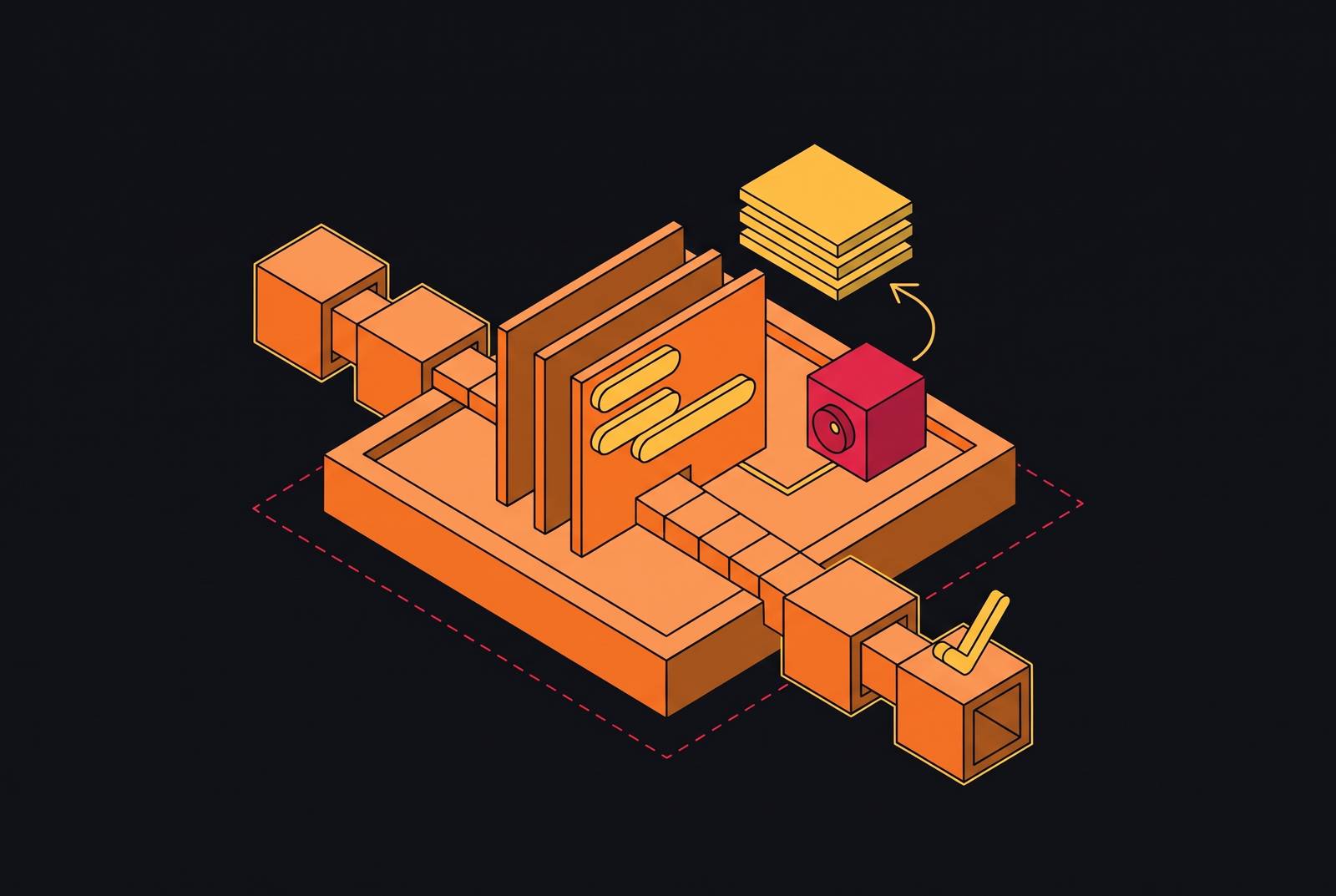
To use an API for agent evaluations without hitting production, point the agent at a stateful simulator and test complete workflows against isolated, resettable state. For Slack agent CI pipelines, that means preserving channel membership, message history, reactions, and threads across calls. This controlled API environment exposes sequencing bugs, supports repeatable failure tests, and remains credible through measured comparison with real Slack behavior.
Why stateless mocks fail multi-step Slack agent workflows
An agent posts a message, adds a reaction, and then reads the thread to decide what to do next. Every call depends on what happened before it. A stateless mock breaks that dependency by returning a canned response independent of the preceding actions. If the thread response is always empty, the test never exposes an agent that misreads its own post.
An agent joins a channel, posts a message, and lists the members to check its context. The member list must reflect the join. If a scenario requires membership, it should flag an attempt to post before the bot joins.
The distinction is between isolating a call and modeling its consequences. A fixture can describe a successful post without making that post available to the next read.
What makes Slack agent CI different from standard API integration testing
A conventional deterministic integration test assumes that fixed inputs produce fixed outputs. A Slack-calling agent introduces another source of variation because identical prompts can lead to different tool selections and argument values. A red build then has competing explanations. The agent may have chosen the wrong action, or the API environment may have changed underneath it.
Parallel CI jobs compound that diagnostic problem. Network round-trips also accumulate across tool calls and concurrent jobs, making live runs slower than locally isolated equivalents. A shared sandbox does not remove those dependencies. Its message history and membership can still change between one job’s write and another job’s read.
A simulator controls the environment. It cannot make an agent’s tool choices deterministic, but it can give each run the same starting workspace and consistent consequences for each call. That separation makes failures easier to attribute. When the API state is controlled, a changed sequence of actions becomes evidence about the agent rather than an unexplained mixture of reasoning changes and external service behavior.
The specific Slack state a simulator must track to be useful in CI
Channel membership must be mutable. After conversations.join, a call to conversations.members must return the updated membership. Leaves must change that state as well. This gives tests a way to distinguish an agent that establishes the required context from one that simply assumes access. The simulator’s starting workspace should also include a channel the bot has not joined so that the distinction is testable.
Message history and thread structure must use the same state. A message created through chat.postMessage must show up in later conversations.history results in the right order. Replies need a more specific relationship. When the agent posts with thread_ts, conversations.replies must retrieve that reply under the intended parent. Otherwise, a test can validate the reply’s text while missing that it went to the wrong conversation.
Agents often use reactions and authorship as part of the context for choosing what to do next. A successful reactions.add must update the stored reactions and counts on the relevant message. The simulator must also know which user_id represents the bot. That identity lets an agent distinguish its own messages from incoming work and avoid posting the same response again. Realistic pre-seeded channels, users, and message history give agents context for these decisions, so each test can start without first building a whole workspace.
How to wire a stateful Slack simulator into a CI pipeline
The setup uses a local service in place of the Slack HTTP endpoint while keeping the path the agent uses to call the API. The job waits until the service is healthy, supplies its address to the application, and runs the agent tests. Teardown follows the suite. A locally spawned process can serve the same role when a container is not the chosen packaging.
A project can export SLACK_API_BASE_URL as an application convention. The test application must read the configured address and pass it to the appropriate option. Merely exporting a variable does not redirect API traffic.
Isolation is the next requirement after connectivity. Each test should receive either a fresh simulator instance or a reset to the pre-seeded baseline, so that one test’s messages and joins do not alter another’s starting conditions. That baseline should contain a workspace, channels including a private channel and an unjoined channel, and realistic message history. The agent can then begin with useful work.
Replacing the HTTP endpoint also preserves more of the integration path than replacing the agent’s tools. Where the simulator implements them faithfully, tests can exercise pagination, rate limits, error envelopes, and authentication refresh logic through the client. Credentials should remain local to this arrangement. The simulator should accept a syntactically valid bot token without checking it against a live workspace, and CI jobs should not receive real OAuth credentials.
Writing agent tests that exercise multi-step Slack sequences
A posting test and a history test do not establish that posting affects history. The first may assert on a successful chat.postMessage response, while the second checks a prepared conversations.history fixture. Both can pass without testing their connection. A useful test is an agent scenario in which later choices depend on state created earlier. Its assertions should describe the behavior being protected.
A concrete scenario begins with an incoming event that prompts the agent to post an alert to a channel. In a second step, the agent reads channel history to check that the message arrived. After that confirmation, the agent posts a reply using the alert’s timestamp as thread_ts, then fetches the thread through conversations.replies. The final read must include the reply that was meant to be there. This tests not only that each method works, but that the agent preserves the parent relationship across the sequence.
The test should also establish that delivery confirmation precedes threading. Without that check, an agent could skip the read the workflow needs and still end with state that looks correct. A separate post, react, and read scenario can test whether a reaction is attached to the message the agent actually created. The target identity must survive across calls. A canned reaction result cannot establish that relationship.
After the agent finishes, direct simulator queries should check the resulting state independently of the agent’s account. Useful assertions include the number of messages in the channel, the recorded reaction, and the reply’s placement under its parent. The agent’s report is not sufficient evidence.
Fault injection: testing how Slack agents handle rate limits, errors, and slow responses
Once the usual sequences work, the same tests can make failures happen at chosen points. Rate limits and slow responses occur unpredictably on live Slack, making those conditions unreliable test cases. A configured simulator makes the timing deliberate. A failure needs to happen within an existing workspace history, so that earlier actions that succeeded still shape how the agent recovers.
For example, a rate-limit scenario can test recovery after partial progress by allowing two successful posts and returning HTTP 429 on the third call. A static response that always returns 429 does not exercise that distinction. A scripted mock can arrange successive response codes, but without shared Slack state it still cannot establish what the earlier posts left behind.
A second scenario injects HTTP 503 into conversations.history after a successful post. The agent should surface a degraded state. A third delays chat.postMessage to test whether timeout handling and retries create duplicate messages. Here, state inspection is essential. The test must examine the channel rather than accept the agent’s statement that it recovered.
A fourth scenario uses HTTP 401 to make the token expire during the run. The agent should enter a needs_reauth state. These conditions test distinct error-handling decisions. Together with the successful sequences, they let the pipeline evaluate what the agent does when it has already changed Slack state but cannot complete the next step normally.
Fidelity and drift: why the simulator must stay verified against the real Slack API
Field names, required parameters, and error behavior can change after the simulator is built. A once-accurate implementation can therefore become misleading without any change to the agent. Passing tests establish agreement with the simulator.
Small response differences can change an agent’s behavior. Returning an empty reactions array is not equivalent to omitting the field when client logic distinguishes those cases. Similarly, accepting a malformed thread_ts can allow an invalid threading sequence to pass. These are concrete conformance gaps. They are most dangerous when the simulator seems helpful because it accepts requests that real Slack would reject.
Before each release, a conformance suite should exercise the real Slack API and the simulator in parallel, compare responses field by field, and block release when differences exceed the accepted tolerance. That work is separate from ordinary agent CI. It uses live Slack to assess the environment that allows routine agent tests to remain isolated from it.
No simulator is completely identical to the live service. The defensible goal is known, measured, bounded divergence. A published fidelity score makes that gap visible and auditable, provided it represents the comparison being performed. When drift in a hand-maintained mock goes unmeasured, there is no such evidence of where passing local tests may stop predicting how the agent will behave in production.
Extending the same simulator approach to RL training and agent evaluation beyond CI
Evaluating agents at scale needs the same control over starting conditions as CI. Comparing two agent versions across many episodes requires both to encounter the same Slack workspace state, rather than whatever a shared live channel contains at the time. Each episode must also remain independent. Otherwise, messages or membership changes from one run can alter the task faced by another and confound the comparison.
The same Docker image and API used in CI can supply those evaluation environments when each instance has isolated state and can reset on demand. Reinforcement learning adds greater concurrency, with thousands of rollout containers needing independent Slack worlds. The underlying requirement does not change. The environment must keep track of each rollout’s sequence and keep its actions from changing other rollouts’ state.
A correction to thread behavior improves the environment used for CI scenarios, evaluation episodes, and training rollouts. Fault scenarios can also test how the agent recovers under controlled conditions without waiting for live failures. The investment is in a reusable behavioral environment. Its usefulness comes from making an agent’s actions produce realistic, inspectable consequences at every step of a run.
Related guide
- Slack, GitHub and Linear API Rate Limits for AI Agents
The published API rate limits for Slack, GitHub and Linear side by side: how each is counted, what an agent sees when it hits one, and how to stay under them.