Rate Limit Exhaustion as an Agent Side Effect
Agents multiply API calls, so fixing quota failures takes budgets.
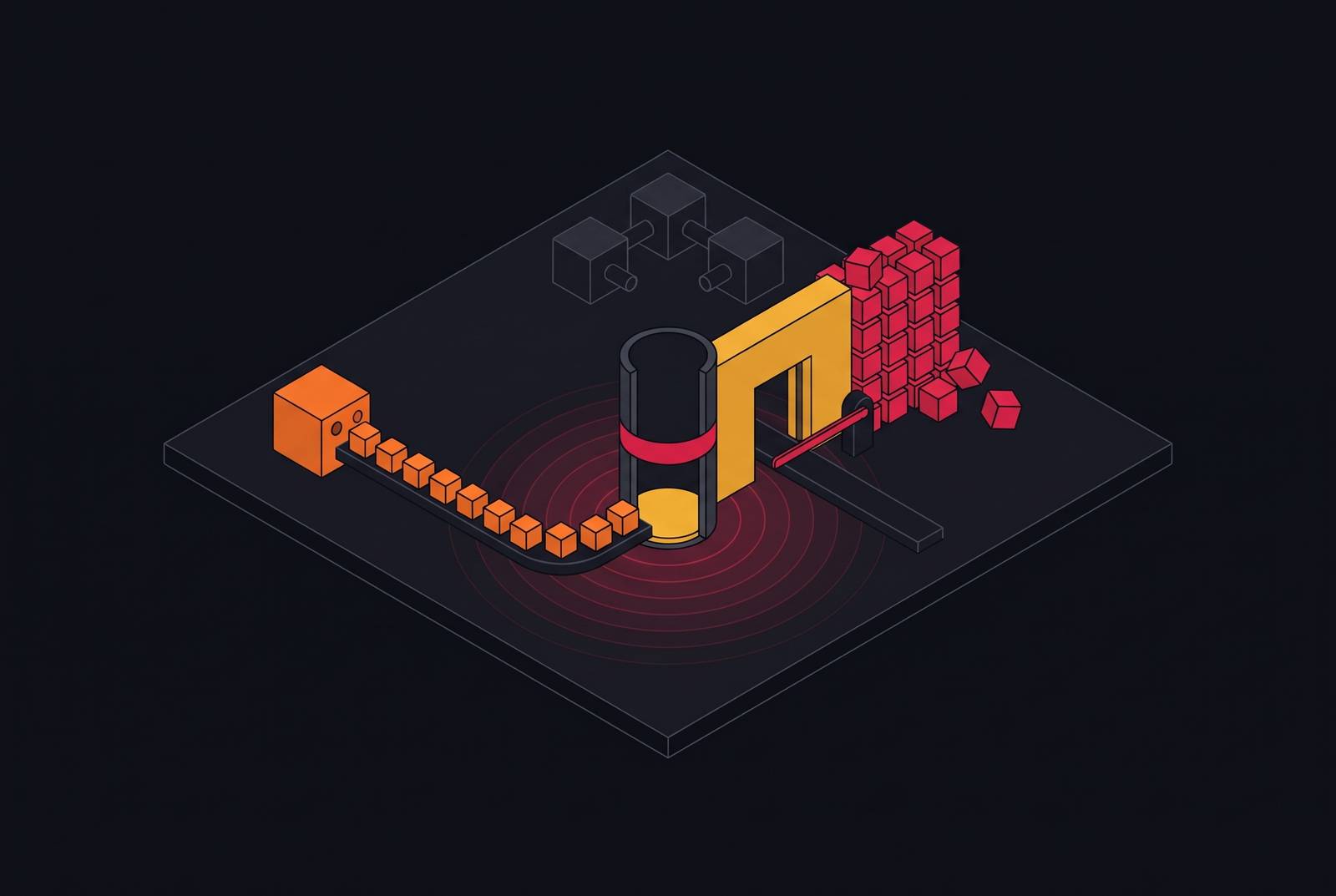
Rate limit exhaustion can be a side effect of what an agent does as well as a configuration error. Agents multiply calls through planning, tool use, retries, and parallel workers while drawing from fixed, often shared quotas. Addressing that mismatch requires architecture that budgets demand and testing that forces failure. Retry logic is only one part of that design.
Why rate limit exhaustion is the dominant production failure mode for AI agents
Agent failure is often framed as bad reasoning or hallucination, but production telemetry exposes a more immediate constraint. Datadog’s LLM Observability telemetry recorded 8.4 million rate limit errors in a single month as of March 2026, making rate limiting its most common LLM call failure class. That finding concerns call failures, not a measured comparison with hallucination. Even so, it changes the engineering diagnosis. When capacity blocks a model call, the model never ran, so changing its prompt cannot fix that failure.
A demo rarely exposes this capacity problem clearly. It runs one clean request along the happy path, while production adds concurrency, retries, branching, and sustained load. Datadog’s State of AI Engineering found that more than seventy percent of organizations run three or more models, multiplying the quota surfaces their agents may touch. Each surface introduces a capacity constraint into a workflow that may already depend on several services.
How a single agent task fans out into dozens of quota-consuming calls
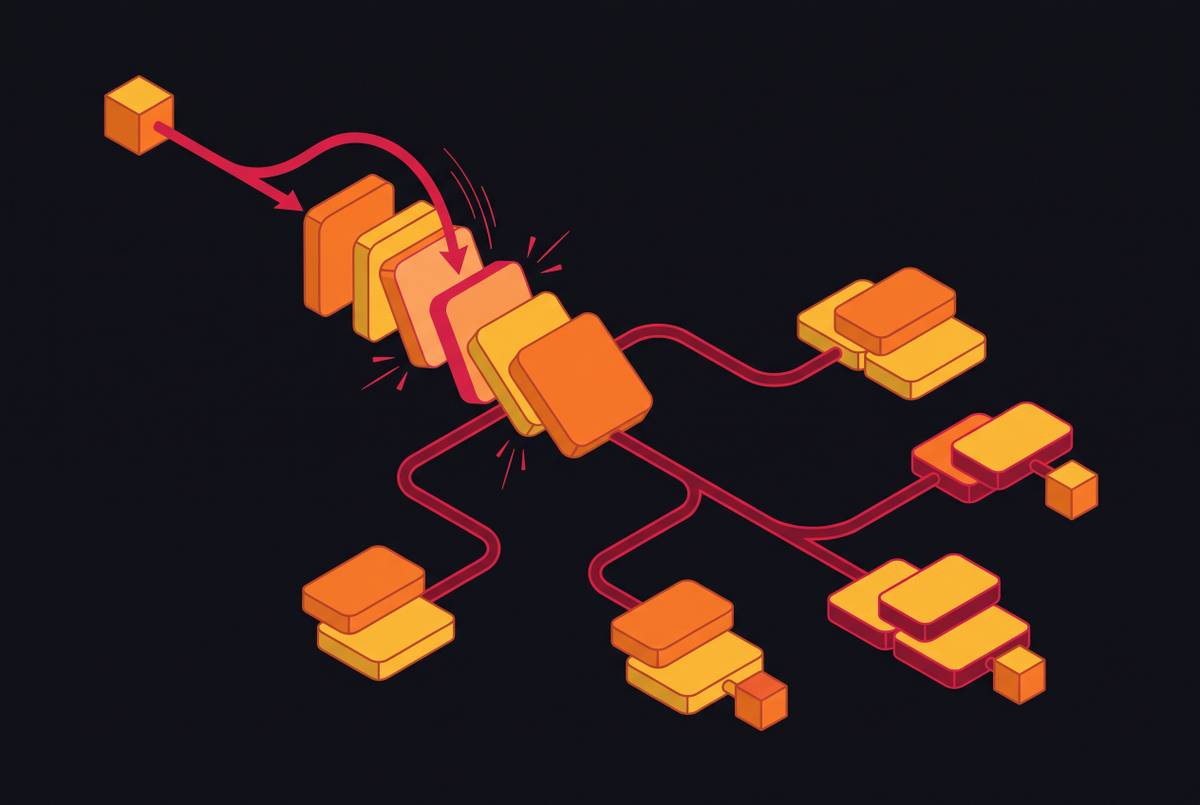
A plain chatbot makes one API call per user turn, while an agent expands a task into a sequence of decisions. It makes a planning call, selects tools through its loop, and interprets tool results to decide what happens next. Retries and sub-agents add further calls to that sequence. The user still sees a single task. The provider sees every request made to finish it.
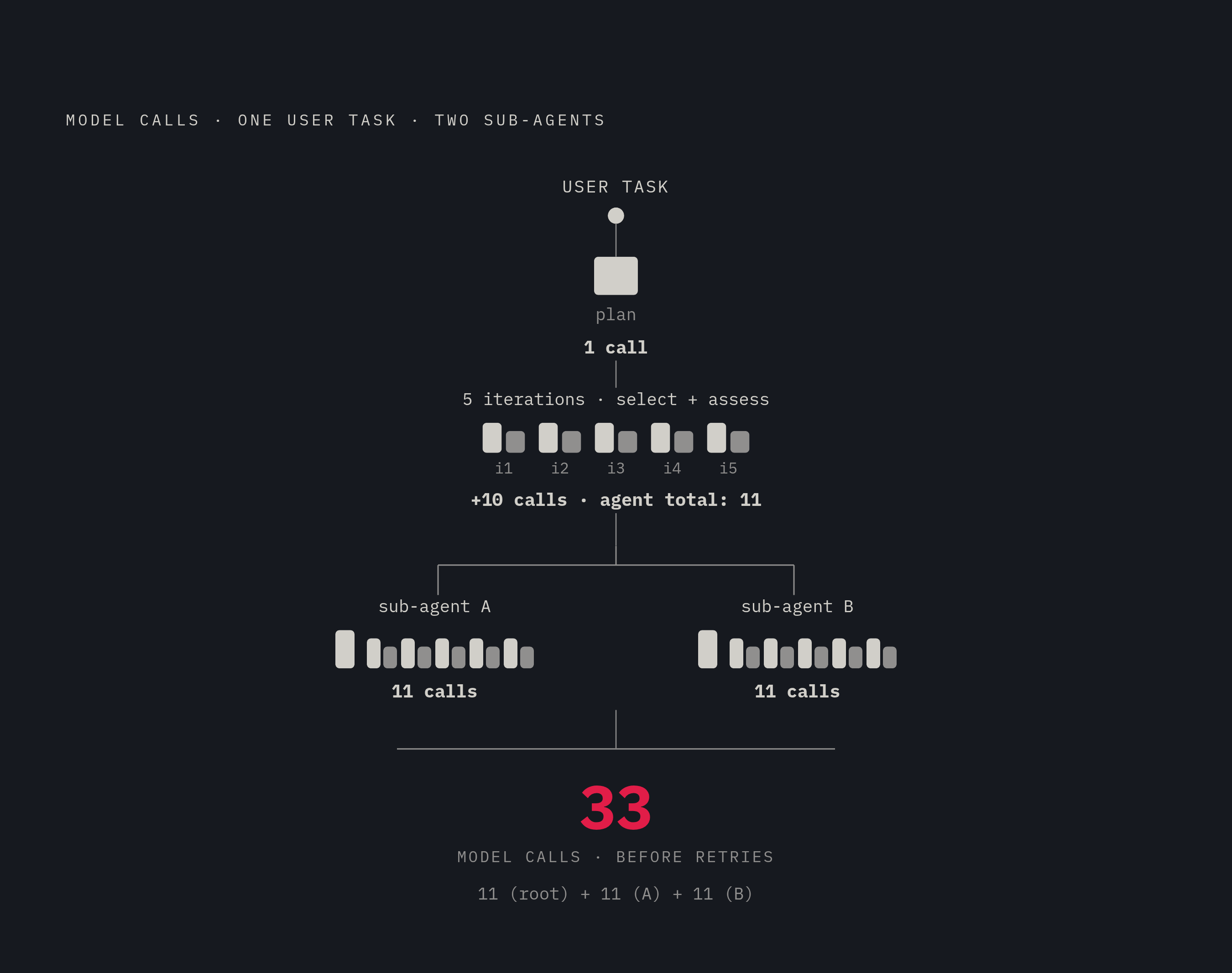
To make the multiplication concrete, consider an illustrative task with one planning call and five iterations, each requiring a tool-selection call and a result-assessment call. That produces a substantial number of model calls before retries. If two sub-agents each run the same pattern, the task requires 33 model calls. Parallel tasks multiply that demand again. This arithmetic sketch shows why task count alone is a poor guide to quota consumption.
The actual call count may also be obscured. The report identifies tool fan-out, retries, and branching as sources of operational complexity requiring deep telemetry, and finds that agent frameworks have nearly doubled in adoption year-over-year. Framework boilerplate can introduce steps and paths engineers do not see directly. Serverless autoscaling makes the mismatch less intuitive because compute grows with traffic while provider quota does not grow with container count. A healthy autoscaling dashboard can therefore accompany increasingly constrained agents.
How multi-agent fleets and shared quotas turn one agent's problem into a fleet-wide failure
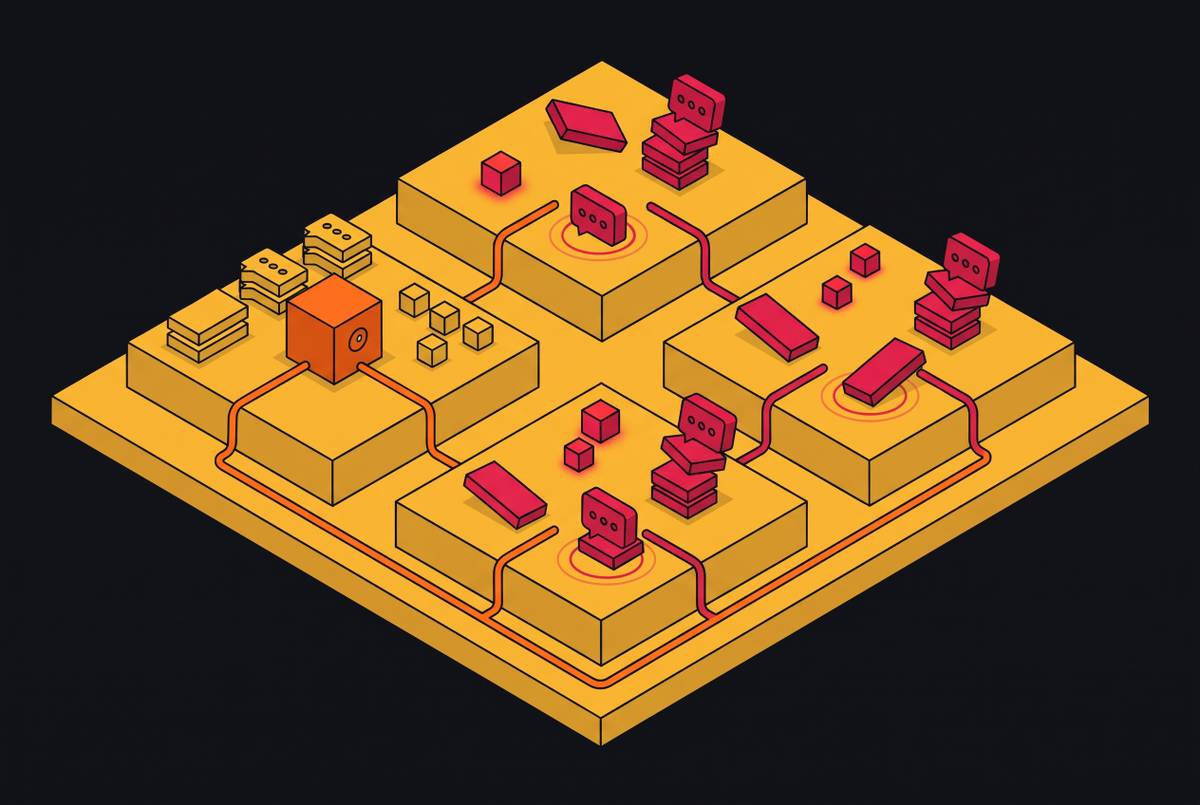
Calls from one worker consume capacity that another worker needs, regardless of whether their tasks are related. Agents making calls per second can exhaust that pool in under a minute. The quota belongs to the fleet. A worker cannot tell how much capacity is left from its own call history alone.
One call receives a 429, its framework retries, and that retry encounters the same constraint while other workers continue sending requests. The resulting storm competes with useful work across the pool. Multi-model environments are harder to coordinate because each model has its own quota surface. The report suggests that organizations may be adding models faster than they simplify their fleets, while the same prompts, tools, and workflows produce different latency and cost profiles across models.
Even exhaustion that appears accidental may not be. LoopTrap describes adversarial termination poisoning, in which malicious content makes an agent believe it still has work to do on its task. Its empirical study across eight LLM agents found average step amplification of 3.57×, with a peak of 25×. That extends the same call-multiplication mechanism into a denial-of-service risk. A fleet without enforced task budgets is exposed both to ordinary runaway execution and to attempts to prolong it deliberately.
Why retry logic alone cannot fix a structural fan-out problem
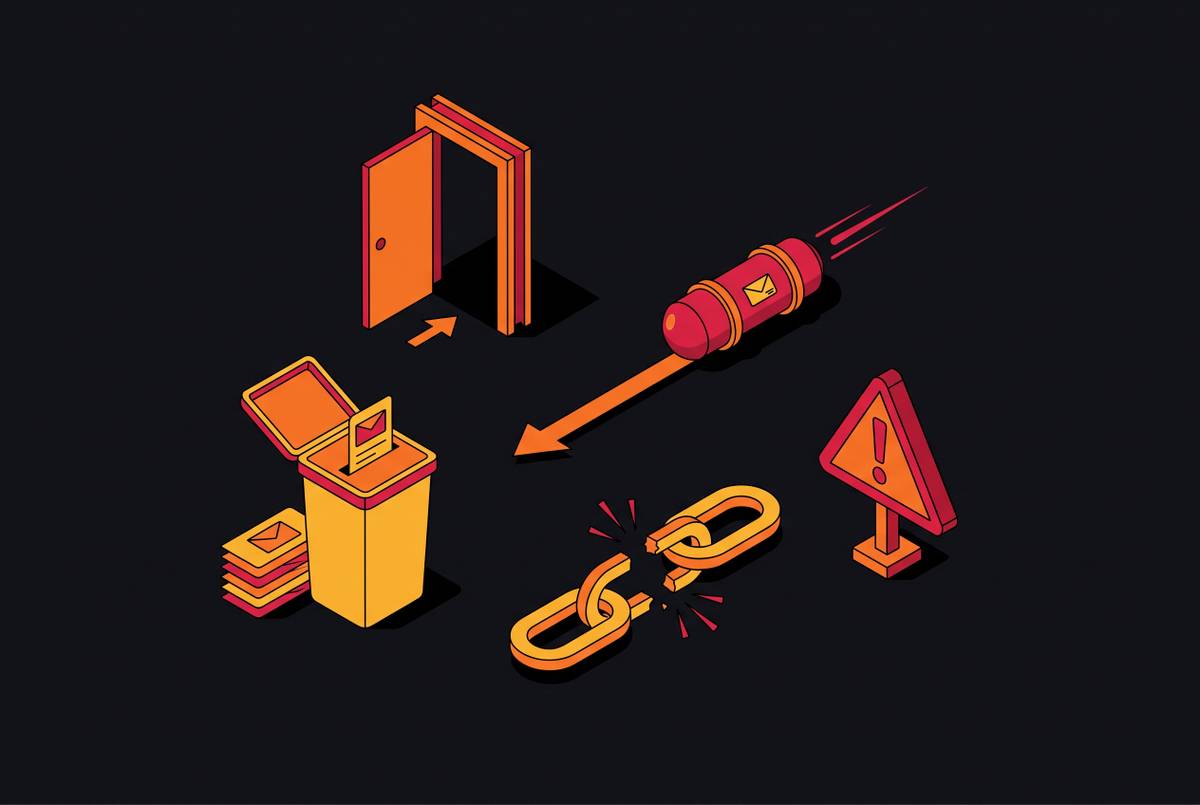
Retry logic can recover from temporary throttling, but it cannot make a fixed quota accommodate unrestricted demand. Synchronized retries create a thundering herd when workers all resume at the provider’s window reset and immediately trigger the limit again. Exponential backoff with random jitter spreads those attempts over time. It does not reduce the underlying call volume. Reading the Retry-After header before choosing a wait duration is the minimum correct behavior, yet many agent frameworks do not do so by default.
If a workflow has partly succeeded before throttling interrupts it, replaying that workflow may re-issue an earlier write. The result can be duplicate records, charges, or messages. The failure response does not by itself establish which prior actions took effect. Recovery must therefore account for the state already changed.
The architectural response is to limit demand before dispatch. A semaphore or token bucket in front of outbound model calls constrains the traffic entering the provider. A shared rate-limit tracker lets workers across the fleet see how much of the quota has been used. Priority queues protect critical tasks, while dynamic reallocation adjusts how the pool is divided. Per-agent retry cannot coordinate that work because it sees only the failure in its own agent.
What good resilience design looks like: budgets, backpressure, and fault-aware agent architecture
To address this structural problem, teams should give every agent loop a hard call-count or token budget. Budget enforcement terminates execution when that allowance is spent, preventing a runaway task from consuming capacity assigned to others. The stop condition must be explicit. Otherwise, an agent can continue interpreting each failure as another reason to act, even when useful progress has stopped.
Backpressure should also precede admission to a multi-step workflow. Where a task requires several calls, available quota should be checked for that sequence before its first call, rather than discovered to be insufficient halfway through. Partial completion can waste quota and corrupt state. Write safety is a separate contract-level requirement. Every write should accept an idempotency key, and retries should consistently reuse it so that replay does not create a second effect.
Routing provides another way to reduce pressure without failing the whole task. The report describes a modular routing mechanism, such as a model gateway, that supports graceful failover when providers throttle and selects models by quality, cost, and latency. Steps that ask less of the model can use a lighter one to use less of the total quota. Fallback still needs to respect the workflow’s requirements. Changing models without evaluating their different operating profiles simply introduces another source of uncertainty.
Within this design, 429 is the 4xx response designated for retry, with header-aware delays and a wide jitter window to avoid synchronized recovery waves. An agent may replace a loud failure with a quiet one by continuing from stale or incomplete information. That risk can be harder to detect than throttling itself. Resilience also means knowing when the state is too stale or incomplete to keep going.
Why you cannot verify resilience design without injecting 429s in a controlled environment
A handler that has only received successful responses remains behaviorally untested. Its code may look correct while failing when throttling interrupts a particular step or affects several workers together. ReliabilityBench, introduced in January 2026, used chaos-engineering-style fault injection to test agent episodes like those in production. Its ablation study found that rate limiting caused the largest degradation of any fault type because agents lacked tested backoff and retry logic for rate-limited APIs.
AgentChaos, submitted in August 2026, describes controlled runtime fault injection at the shared LLM API layer without modifying agent source code. This supports testing faults where agents encounter them, rather than relying on inspection of the agent’s own implementation. Repeatability is essential to that verification. A test needs to force the same interruption and assess whether the downstream behavior matches the design, including what the agent does after waiting.
Live APIs cannot provide those conditions on demand. A provider will not return 429s on a specified schedule, and deliberately consuming its quota during testing can make the test itself a production incident. Stateless mocks avoid that resource cost but leave a different gap. They can return a 429 body without representing shared state when several requests are inflight and some have already succeeded. The difficult part is not just the error response, but the state surrounding it.
What a stateful simulator that injects 429s actually gives you that mocks and live sandboxes do not
A stateful simulator preserves the effects of earlier calls. Creating a record changes what a later list request returns, and deleting it changes that result again. This makes a repeated write observable as a duplicate. Idempotency-key behavior can then be tested end-to-end. By contrast, a stateless status fixture may make polling terminate immediately or never terminate, return an ID unrelated to the created object, or leave a conflict path unreachable.
Deterministic injection lets tests control when a failure hits as that state changes. A simulator can return a 429 on the Nth call, on every call within a window, or only on writes. These schedules replay the steps of specific production incidents. Fidelity remains a separate requirement. A simulator that drifts from the live API tests the wrong behavior, so verification against that API before every release is necessary for trustworthy results.
The APIs agents use illustrate different parts of this requirement. A maintainer proposed a solution in 2024, but it had not shipped as of April 2026, leaving no first-party offline testing path. GitHub issue workflows illustrate the value of state. An in-process fake that keeps issue lists can test whether an agent avoids opening an issue that already exists, while a stateless fake cannot recreate a rate-limited write that partly succeeds.
The open-source agent-pay project from October 2026 shows what a fuller PayPal mock environment looks like. It honors PayPal-Request-Id, validates orders, refuses capture before approval, and tests 429 and 5xx retries, token refresh, parallel captures, and outages. Stripe’s agentic benchmark found agents treating error responses as proof of success, including “Good, the endpoint is working, it's returning a proper Stripe error for an invalid customer ID”. An environment that returns state-appropriate errors makes that reasoning failure available for testing.
Real APIs are slow, rate-limited, non-deterministic, and sometimes irreversible, which conflicts with reproducible reinforcement learning loops. Horizontal simulation gives tests control over state across thousands of containers. That allows deterministic fault injection to operate at the scale of agent evaluation.
Building a testing practice that treats 429 injection as a first-class CI concern
Teams should begin with a fault catalog drawn from production incident history. Rate limit injection belongs first because it is the most damaging fault type in the cited ablation and quickly reveals whether fault handling exists at all. It belongs in CI from day one. Other failures that have been recorded, including silent truncation from context overflow, can be added to the catalog while capacity stays its first focus.
The first tests should exercise the full workflow. A 429 injected midway should test whether writes retain idempotency keys, whether the agent avoids proceeding on stale state, and whether its loop terminates. Each is a distinct stateful assertion. The full agent loop should run against a simulator without live credentials or real quota consumption, with the fault’s position specified in advance.
Contract maintenance must accompany those tests. Teams should add nightly drift checks against upstream OpenAPI and AsyncAPI specifications for every external API the agent calls. The Kalshi specifications changed on October 26, 2026, illustrating why a previously accurate contract cannot be assumed to remain accurate. Fleet and training-loop tests should then run the same injection sequences across containers to test how agents behave when they share a quota. This makes 429 testing the starting point for a broader discipline of testing agents as systems whose failures arise from both their structure and individual responses.
Sources
Related guide
- Slack, GitHub and Linear API Rate Limits for AI Agents
The published API rate limits for Slack, GitHub and Linear side by side: how each is counted, what an agent sees when it hits one, and how to stay under them.