Replacing Recorded HTTP Cassettes With Live Simulator State Authority for Stateful Integration Test Suites
Stateful simulators beat cassettes by catching what replay can't.
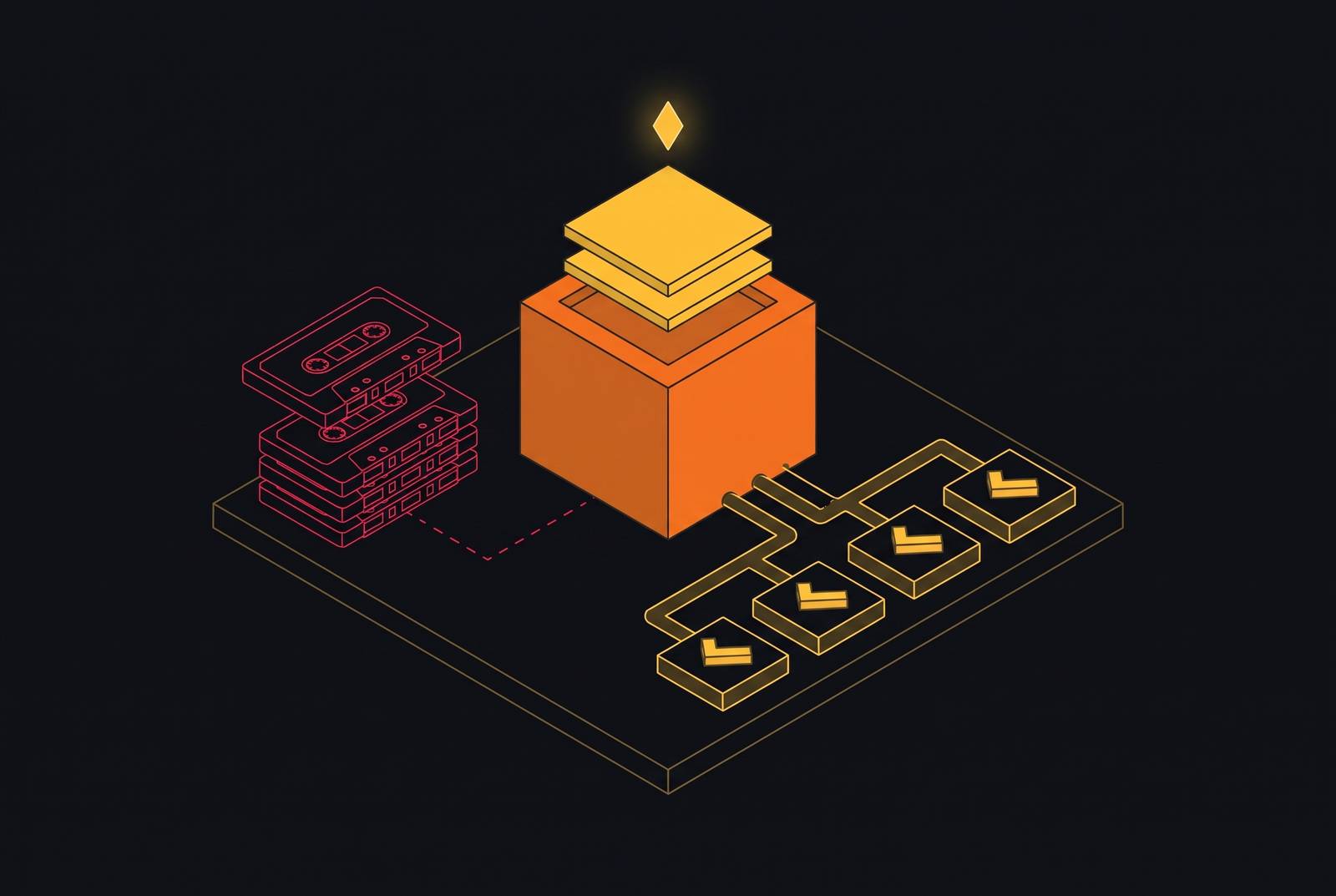
Integration testing against stateful APIs requires a simulator that owns a mutable data model, starts from known test data, and preserves changes across sequential calls. Recorded HTTP cassettes replay responses computed from state at recording time, leaving dependencies on current state unverified. A local, isolated simulator can preserve determinism and fast CI feedback, provided its behavior is continuously compared against the live API.
Why cassette replay is the wrong model for stateful API workflows
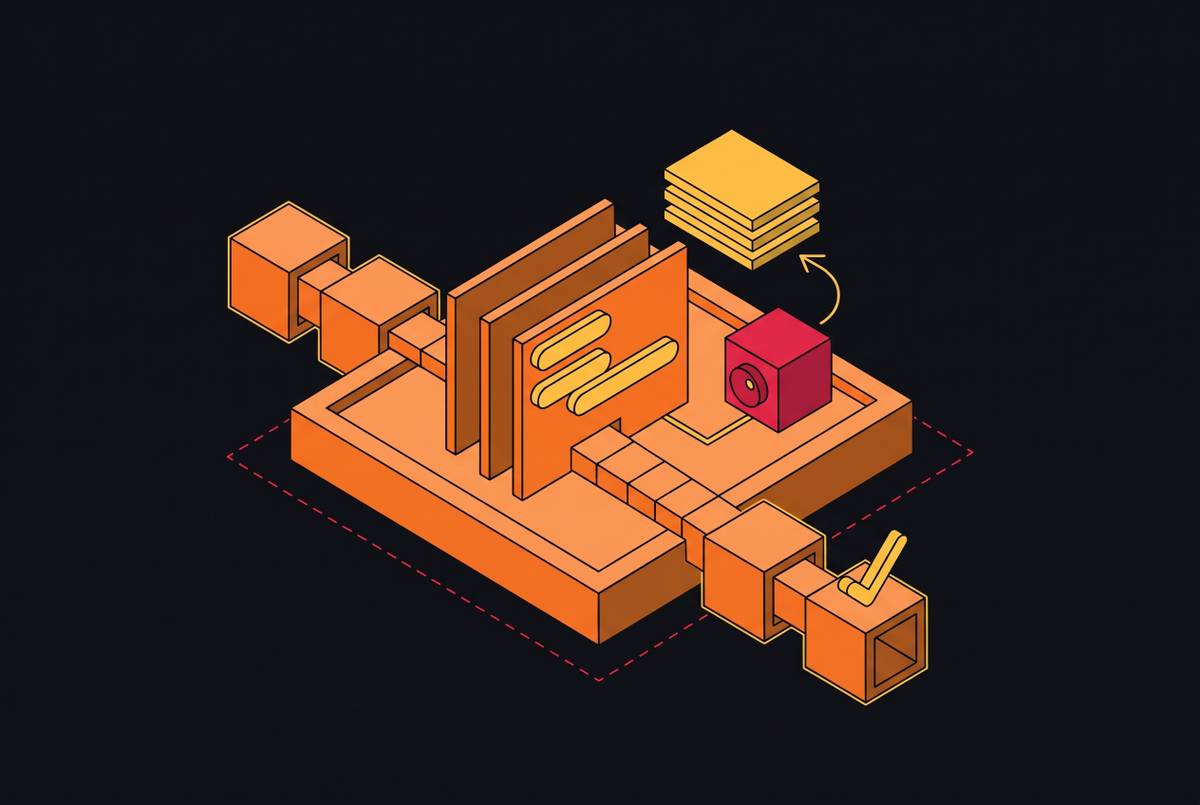
Cassettes intercept HTTP at the transport layer, serialize request/response pairs into files, and replay those files when the tests run again. When the files are committed to version control, isolated calls are deterministic, need no credentials, and run fast. That value is real for stateless tests. The limitation appears when a correct response depends on earlier writes as well as the incoming request.
If test N+1 depends on what test N created, its cassette embeds the prior state present during recording and implicitly assumes that state still applies during replay. An order flow, an auth handshake, or a create-then-read-then-delete sequence can therefore replay recorded answers without establishing that the preceding operations justify them.
Turn N includes the model’s response from turn N-1, so a different branch at step 2 can break every subsequent match. Unrecorded input combinations and failure paths have no answer at all.
What "owning state" actually means and why it changes what a simulator can verify
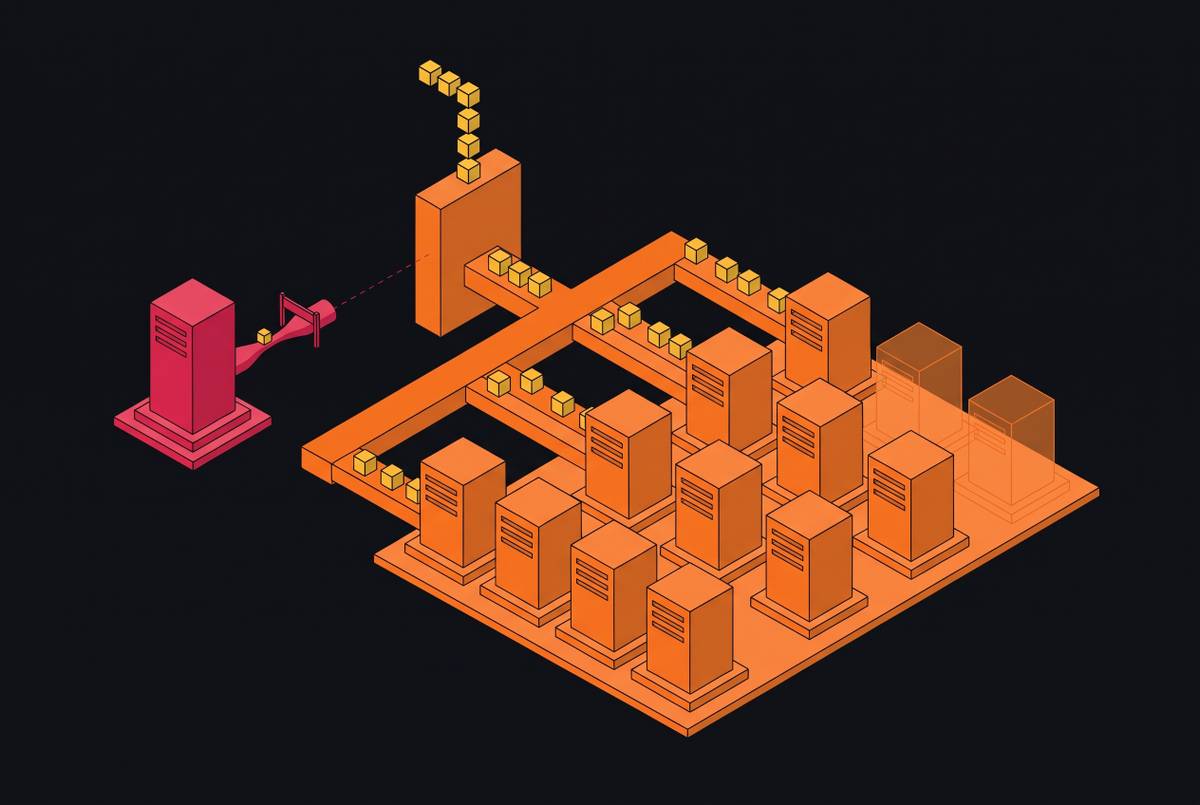
A stateful simulator computes responses from a live data model. When a resource is added, the model changes and a list of resources shows the addition, while later updates and deletion change what later reads return. Unlike a mock returning a fixed response, service virtualization models behavior, including state changes, latency, and errors.
The Ilmar emulator applies changes to its state or to a bare repository. It supports writes that include labels, issue comments, PR operations, and git pushes. The WorkOS emulator starts with seeded users, organizations, memberships, RBAC, and SSO connections.
WireMock’s scenario state machine represents a different kind of state. Named scenarios and Handlebars templating can express scripted transitions, but they are not a mutable resource model. Issues, labels, and PRs whose contents change with writes must be hand-scripted per test.
How cassette drift silently poisons CI confidence over time
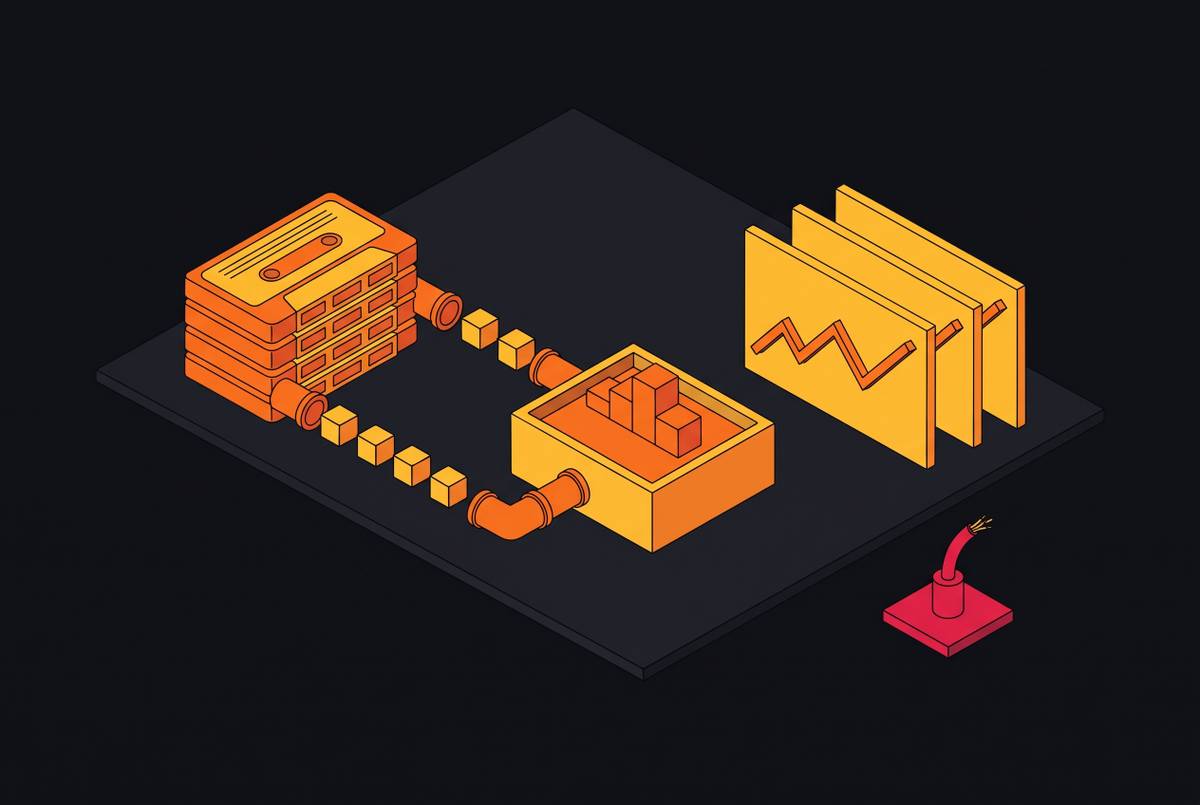
A matching cassette can pass after the provider’s API has changed. The request still matches, so replay returns the old response even when production now uses a different field, enum, or payload. Green CI becomes an active false signal.
Hand-written stubs have the same weakness, and their maintenance burden grows as schema changes invalidate accumulated assumptions. Provider sandboxes can also lag production in fields, rate limits, and webhook payloads. Recording from a sandbox can preserve that discrepancy.
Tests that span services add to the uncertainty because dependencies recorded on their own can capture each service at a different point in its history. Mocking five services this way can create a combination that never existed in production. A passing workflow then establishes consistency only with the assembled recordings.
Why pre-seeded, known-state test data is the foundation of a useful simulator
An empty simulator exercises few realistic paths, just as an empty sandbox does. The seed belongs in the test contract. Declared starting data makes results reproducible across developer machines and CI containers while allowing tests to verify changes against a known baseline.
A realistic Stripe scenario might include charges since November 2024, including one disputed charge, one refunded in full, and one bank debit still pending. The same clients, invoice numbers, and dates would appear across the studio’s Slack, Resend, PayPal, and Lob worlds.
The WorkOS seeding model applies this principle to identity workflows through users, organizations, memberships, RBAC, and SSO connections. A known seed gives the test suite control over the initial state. Vendor-controlled data cannot offer that same authority when its lifecycle is outside the test suite’s control. PayPal’s periodic data cleanup shows why a sandbox cannot own test state for good.
Running a stateful simulator in CI without sacrificing the speed cassettes provided
Cassettes do let tests run fast and in isolation. A local simulator can do the same without making real API calls during the integration run. No provider credentials or rate limits are involved. Determinism comes from the seed that is declared and state transitions that are controlled.
The CI principles remain straightforward. Real API keys should stay out of CI, integration tests should be separate from unit tests so their schedules can differ, and feedback should remain fast enough for every PR. Each job can launch its own simulator from the same seed. Independent jobs then need no coordination with a shared sandbox, while operations within each stateful workflow retain their required order.
Keploy’s eBPF approach addresses a different source of effort by capturing dependency interactions at the kernel level and replaying them in CI. This reduces recording and authoring work compared with hand-maintained cassettes. It remains replay, however, so changed interaction sequences still receive responses based on stale state. For parallel agent evaluations, isolated simulator instances also let each container reset without disturbing another run.
Fault injection as a first-class test concern the simulator must own, not the test harness
A write can succeed even when its response is lost. The client sees failure, but the resource has changed. A cassette can replay a connection failure without owning the committed change that makes recovery ambiguous. Testing that condition requires control over both state mutation and the reply.
The Ilmar emulator applies the write, then can drop or reset the connection before replying, or reply only after the client’s timeout. This covers labels, comments, PR operations, and git pushes. The WorkOS emulator exposes validation errors, simulated rate limits, and temporary failures through test setup. The simulated service itself therefore controls failure behavior.
AgentChaos, accepted at ASE 2026, modifies LLM API responses at runtime without changing agent source code and evaluates faults across five agent architectures. The Agent Error Simulator, presented at IEEE eScience 2026, uses a transparent proxy to inject format, logic, and tool-call faults.
A 2026 study of agent reliability found that verify-before-retry gives a 36 percentage point improvement in high-fault settings with non-atomic tool failures. An agent should check whether an ambiguous operation succeeded before retrying. Testing that behavior requires the simulator to preserve the successful write while withholding its acknowledgment.
Continuous verification against the live API as the answer to simulator drift
State ownership does not guarantee fidelity to the provider. Cassettes drift when the behavior they recorded is out of date, and simulators drift when the way they work stops matching the live API. Both can produce misleading green tests. The replacement needs continuous comparison alongside a more capable internal model.
The Ilmar design runs a contract suite against the emulator and, opt-in, against real GitHub. A behavior that passes locally must also pass against the live service. For a continuously verified simulator, those comparisons should gate every simulator release so fidelity is a versioned property.
Updrift, described in 2026 as an AI reliability engineer for third-party APIs, watches providers for semantic drift, maps affected repository lines, and opens sandbox-verified migration PRs. For RL environments, the corresponding discipline includes comparison against current production data and periodic human recalibration of verifiers. Otherwise, success may measure adaptation to the simulation’s quirks.
The one genuine advantage cassettes retain and how to preserve it without keeping cassettes
Strict request-body matching provides regression coverage that a permissive simulator does not. A changed prompt, model parameter, or serialized input can break a cassette match even when the new request remains valid. That failure can be useful. A simulator accepting any well-formed request may silently accept the same change.
This signal is distinct from checking state-dependent behavior. Losing it is a real migration cost, particularly for agent suites whose recordings implicitly guard prompt wording. The appropriate response is to separate the concerns. A dedicated, scheduled prompt regression suite can use real or replayed responses without placing that dependency in the main integration suite.
Structural tests with stub LLMs catch orchestration bugs, the simulator checks stateful paths, and scheduled regression tests detect prompt drift.
Stateful simulators as the substrate for RL training environments and agent evaluation
RL training and agent evaluation need the same control over state as sequential integration tests. Thousands of rollouts across many containers must start from known conditions, and deterministic environments help show whether rewards come from agent behavior or from noise in the environment. Each rollout needs its own mutable world. Isolation, clean resets, and fault injection therefore support training as well as testing.
AgenticAI-Supervisor demonstrates a software-interface- and UI-driven RL Gym architecture that separates environment creation from scalable execution. Its execution-and-verification loop generates 100% data integrity and provides verifiable rewards for deep RL, with high-fidelity traces and multi-dimensional reward shaping. A 2026 paper looks at another approach in which a teacher agent solves tasks while an LLM simulator tracks state and gives API responses that fit that state. Fine-tuning on its synthetic dataset yields significant gains on AppWorld and OfficeBench, including environments unseen during training.
LLMSim from ManipleAI, described in 2026, applies simulation to the Anthropic, OpenAI, and DeepSeek APIs in their native wire formats. It supports scripted tool calls, streaming, and failure injection without a vendor key. A training loop, like a test suite, needs evidence that success transfers beyond the simulated world.
What to look for when choosing or building a simulator to replace cassettes
For teams choosing a replacement, five properties distinguish state authority from more elaborate replay. The simulator must own a mutable data model and come with realistic pre-seeded data. It must also provide native fault injection, continuous verification against the real API, and isolated per-job instances that reset cleanly.
Fault support should include latency, 429s, 503s, and ambiguous writes configured at the simulator level. Verification for each release should make fidelity something that is published and tied to a version. Isolation should keep state from leaking between jobs that run in parallel. A replacement that lacks these properties can move the original suite’s uncertainty into a new implementation.
Teams need not migrate every cassette at once. Structural stub tests, stateful simulation for sequential paths, and scheduled cassette re-recording for prompt regression provide an incremental route as maintenance costs grow. The Ilmar and WorkOS cases show that purpose-built emulators are achievable, but building the first version is not the enduring commitment. The build-versus-buy decision turns on who will keep the model aligned with the live API.